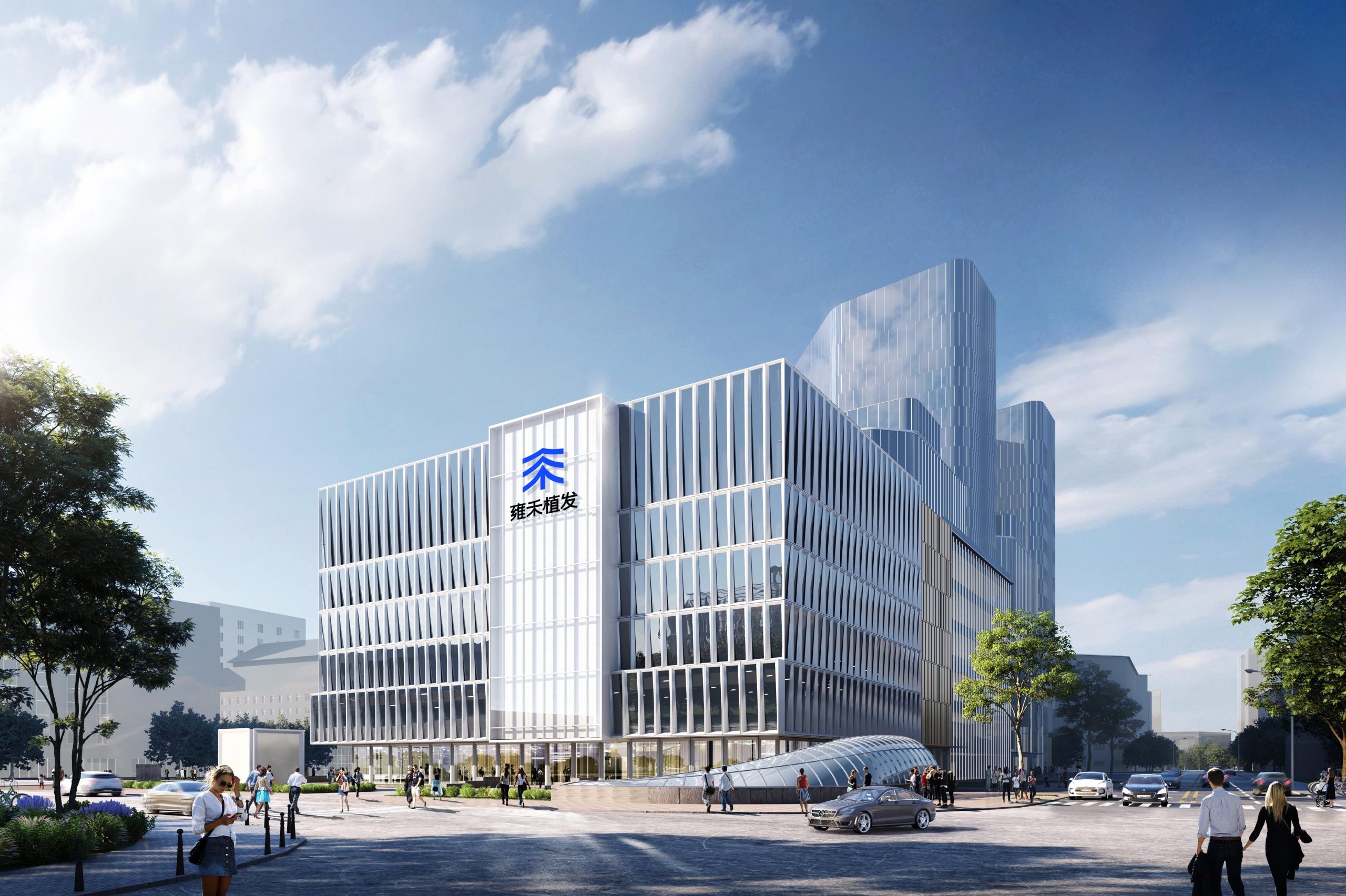
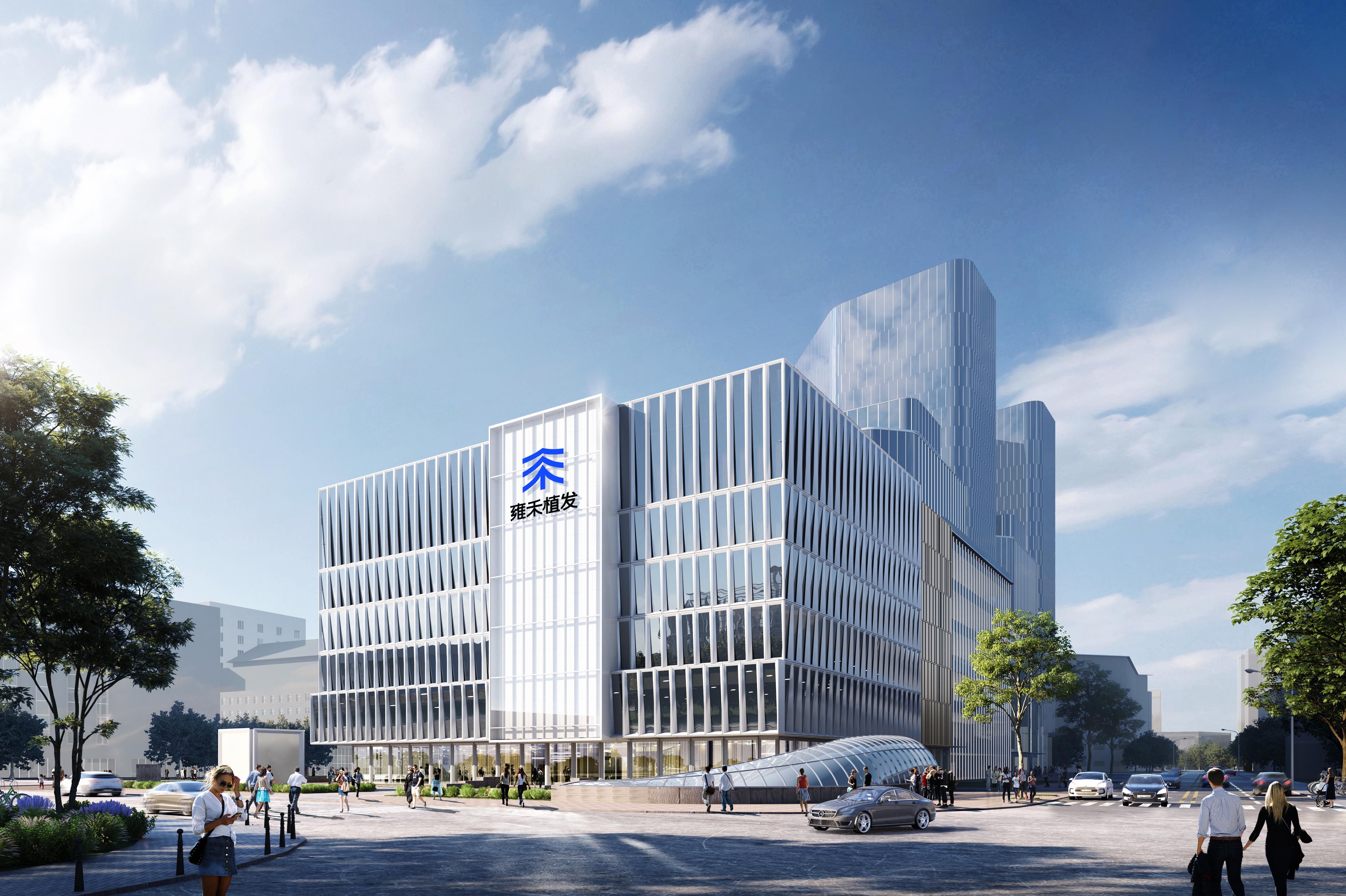

When Zhang Yu started Yonghe Medical twenty years ago, hair transplantation in China was a niche backwater. Two decades later, Zhang leads a publicly listed company that performed 71,380 hair transplant procedures in 2025, operates 63 clinics across 61 Chinese cities, and just turned its first annual profit after a post-IPO strategic reset. Now, he is eyeing something more ambitious: turning Yonghe into the first Chinese medical services company to build a genuinely global hair health platform.
This profile draws on an exclusive interview conducted at Yonghe’s Beijing headquarters in March 2025, alongside the company’s newly released FY2025 annual results.
The Founder: Twenty Years, One Industry

Zhang Yu is an unusual figure in China’s consumer healthcare sector. Most founders of his generation built their companies by riding a single market wave — and cashed out when the wave crested. Zhang has stayed, and more importantly, he has kept changing.
“Yonghe has survived twenty years by constantly reforming itself,” he told Pandaily. “Any business model is a product of its era. The real challenge isn’t building a successful company. It’s staying successful as the market evolves.”
He traces the company’s early survival to a bet he made against the industry’s prevailing logic. Where competitors poured money into marketing and packaged proprietary surgical “technologies” — a practice he bluntly calls 包装化 (bāozhuāng huà, or excessive packaging) — Zhang pushed Yonghe toward clinical standardization. “Medical packaging creates a house of cards,” he said. “You claim generation one, then you have to claim generation two, then generation eight, and eventually you have nothing left to claim.”
That instinct sharpened into a formal strategy in 2022, when Zhang initiated what he describes as the company’s deepest self-reinvention: stripping out sales-led culture, de-emphasizing surgical technology marketing, and rebuilding around a tiered physician system — where doctors are ranked by experience and clinical record, and patients choose and pay accordingly, much like choosing between a resident and a senior specialist at a public hospital.
“When we started physician tiering, it was painful,” he admitted. One clinic that previously ran on a single do-everything doctor now needs two or three, each at different price points. Short-term cost pressure was significant. But the system, now maturing, is becoming Yonghe’s structural moat: experienced doctors are tied to the platform because the tiering system rewards their accumulated clinical data. Young surgeons choose Yonghe because the platform offers a career path that independent clinics cannot.
The Financials: A Turnaround Validated
For investors, the FY2025 annual results released on March 31, 2026 tell a clean turnaround story.
Revenue was essentially flat year-on-year at RMB 1.808 billion (+0.2%), but the composition shifted meaningfully. Hair transplant volumes grew 19.7% to 71,380 procedures, while average revenue per procedure declined from RMB 22,306 to RMB 19,265 — reflecting a deliberate price-band widening strategy Zhang describes as necessary to capture a broader patient base without sacrificing premium positioning at the top end.
The more striking numbers are on the cost and margin side. Gross profit grew 10.1% to RMB 1.194 billion, and the gross margin expanded from 60.1% to 66.0% — a nearly six-percentage-point improvement driven by clinic footprint optimization, digital and intelligent upgrades, management model restructuring, and marketing efficiency improvements. Sales and marketing expenditure fell to RMB 806 million from RMB 902 million, as the company’s shift away from paid acquisition toward content marketing and retention began to flow through.
The net result: a swing from a RMB 226.6 million net loss in FY2024 to a RMB 73.6 million net profit in FY2025. EBITDA rose 158% to RMB 363.7 million. The company ended the year with RMB 749 million in cash and zero bank debt, and has proposed a maiden dividend of RMB 0.076 per share.
“A lot of people looked at our 2024 results and saw a company cutting costs to survive,” Zhang said. “What they missed was the structural improvement underneath — the margin expansion, the conversion rate improvement, the cash generation. The surface numbers looked bad. The architecture was getting better.”
The Global Observation: A Founder Who Did His Homework
The most revealing part of our conversation was Zhang’s account of his international research over the past eighteen months. He has visited Turkey, South Korea, Japan, Thailand, and the United States — not on industry junkets, but as a deliberate competitive intelligence exercise, in some cases posing as patients to observe clinic operations firsthand.
His observations are sharp and, for a Western investor trying to understand the global hair restoration market, worth dwelling on.
Turkey surprised him. Istanbul’s hair transplant cluster — he says the city has 600–700 clinics — is a genuine global hub, drawing patients from the US, UK, France, and across Europe. The economics are built on three pillars: government support for medical tourism, Istanbul’s geographic position as an 8-hour flight from most of the world, and labor costs that keep a full hair transplant procedure priced around USD 3,000 — comparable to China and a fraction of US pricing.
But the Turkish model has a structural ceiling. Zhang commissioned a detailed legal and market study from a Big Four firm after his visit. The report confirmed something he had suspected: roughly 50% of Istanbul’s hair clinics operate without proper medical licenses, and the majority are single-location owner-operated shops with no scalability. “Turkey built the world’s biggest hair transplant destination, but almost nobody there has built a chain,” he said. “That’s actually an opportunity.”
South Korea impressed him with its depth of specialization. He visited clinics that refused to serve male patients entirely, focusing only on female hairline aesthetics. Others had narrowed their entire practice to eyebrow transplants. “Korea is intensely competitive, so practitioners have been forced to specialize in ways China hasn’t yet reached,” Zhang observed. He sees this as a preview of where Yonghe’s own clinical segmentation strategy is heading — Yonghe has already begun building a dedicated female aesthetics division, with 30 cities now hosting women-only consultation zones.
Japan is essentially a non-market for surgical hair transplants: cultural preference for wigs, particularly among men, and a high-quality domestic wig industry (he cited Aderans as a dominant player) means demand for surgical intervention is minimal.
The United States has the opposite problem: premium pricing. An average US hair transplant costs USD 10,000–20,000, driven by labor costs that make the surgical economics almost unworkable at scale. “In the US, hair transplantation is still a luxury,” Zhang said. “In China it’s becoming a mainstream elective procedure.”
His summary: “If you’re measuring by total procedure volume, China leads the world. If you’re measuring by international patient draw, Turkey leads. If you’re measuring by clinical refinement, Korea leads. Nobody has put all three together.”
The International Strategy: Two Steps, Timed Differently
Zhang’s global ambitions are real but strategically sequenced. He is explicit about this: Yonghe is currently in Step One, and Step Two involves a different capital model and timeline.
Step One: Draw international patients into China. This is already underway. Yonghe currently derives approximately 3–4% of revenue from patients from outside the Chinese mainland (including Hong Kong, Taiwan, and Macau) and international markets like Singapore. Zhang expects this to exceed 5–6% in 2026. The company is advertising on YouTube, Google, and Facebook, targeting overseas Chinese communities as the primary near-term segment — people who travel back to China regularly and can combine a procedure with a family visit. He is also evaluating Hainan’s Boao special zone, where post-free-trade-zone opening, over 80 countries now have visa-free access, as a potential hub for international medical tourism.
Hong Kong is an instructive case study. Yonghe acquired a Hong Kong clinic (previously branded as a US-origin chain) around 2019. For years it generated modest but stable revenue of RMB 13–15 million annually. Post-pandemic, as Hong Kong residents began traveling to Shenzhen for cheaper services, the clinic turned loss-making. Yonghe’s response was counterintuitive: it began redirecting Hong Kong patients to its Shenzhen facilities, where procedures cost roughly 40% of Hong Kong prices and quality is demonstrably higher. Revenue from the Hong Kong operation has since grown to approximately RMB 40 million, and Zhang believes it can reach RMB 100 million. “Before we did this, we assumed Hong Kong was untouchable — an international city where we’d be out of our depth,” he said. “We got there and found we were better.”
Step Two: Export the system, not just the brand. This is the more complex and longer-dated part of the strategy. Zhang is clear that the conventional approach — opening Yonghe-branded clinics abroad, hiring local staff, doing local marketing — is too capital-intensive and operationally risky in markets where Yonghe has no regulatory history.
His preferred model is franchise or technical partnership: find existing clinics in target markets that have facilities and local regulatory standing, but lack clinical systems and training. Yonghe would provide physician training, diagnostic protocols, patient care standards, and the brand. The local partner provides the compliance infrastructure.
“What we’re exporting is the system, not the surgeons,” he said. “You can’t just take Chinese doctors overseas — their licenses aren’t recognized anywhere, including Hong Kong. But you can take the diagnostic framework, the quality protocols, the training curriculum. That can travel.”
Turkey remains his most-watched target. The top Istanbul clinic’s founder is scheduled to visit Yonghe’s Beijing headquarters later this year. The attraction is straightforward: Istanbul already has the patient flow (overwhelmingly international) and the cost structure. What it lacks is the clinical standardization and scalability that Yonghe has spent a decade building. “If Yonghe gets into Turkey, we’re not just serving Turkey,” Zhang said. “We’re positioned for the US, France, the UK — everyone already flies there.”
The company is also in talks with a Bangkok-based franchise group that operates hair clinics across more than 60 locations globally under a single brand. Zhang and the group’s Indian founder had planned to meet before this interview; the meeting was rescheduled but is expected to happen imminently.
The Acquisition Question: Money, Laws, and Caution
For investors wondering about acquisition timelines, Zhang is measured in his response— and for good reason.
The primary constraint is not capital. Yonghe closed FY2025 with RMB 749 million in cash, zero bank debt, and strong operating cash flow.
The constraint is legal and regulatory complexity. His Turkey due diligence revealed a 50% unlicensed operator rate. South Korea’s clinic ownership structure — over 90% of clinics are owned by individual physicians rather than corporate entities, making consolidation structurally difficult — creates different challenges. Different markets have different rules about whether medical corporations can be foreign-owned, whether foreign physicians can practice, and what constitutes an acceptable ownership structure for a medical business.
“International expansion in healthcare is not like opening a restaurant chain,” Zhang said. “Each country is its own puzzle.”
When pressed on acquisition criteria, he identifies two primary factors: geographic and strategic positioning (Turkey for its international patient hub status; Singapore for wealthy Southeast Asian patients; Taiwan for scale in a culturally adjacent market) and existing operational infrastructure (partners with licensed facilities and local clinical teams, where Yonghe can add the system layer). He is explicitly not looking for revenue multiples or brand acquisitions — he wants shells he can build on, not finished products he’d overpay for.
The Technology Bet: Robots, AI, and the Data Asset
Zhang’s longer-term strategic vision hinges on two technology threads that will shape Yonghe’s competitive position both domestically and in any international expansion.
Robotic surgery. China’s medical regulator approved two robotic hair transplant systems in 2024 — a milestone Zhang has been anticipating for years. He is not yet deploying them commercially, and his reasoning is analytically interesting: the current economics don’t work because the robotic surgery industry is stuck in a chicken-and-egg problem. Machines cost RMB 1.5 million; without volume, manufacturers can’t move to assembly-line production to bring costs down to RMB 400,000; without lower costs, clinics won’t adopt at scale; without scale, the robots don’t accumulate the surgical data they need to improve.
“Yonghe did close to 70,000 procedures last year,” Zhang said. “If we committed even 20% of our volume to robotic surgery, we’d be generating more training data in a year than the robot companies have seen in their entire history. We have the power to break the deadlock — but only if the economics work for us too.”
His implicit point for investors: whoever controls the procedure volume controls the data, and whoever controls the data controls the next generation of robotic surgical systems. Yonghe is positioning itself as the essential partner for any robotic hair surgery company that wants to achieve clinical viability in China. That is a strategically valuable position to occupy.
AI and large-scale clinical data. Yonghe is building what Zhang describes as a proprietary clinical data model in partnership with a diagnostics company. The scale is significant: 70,000 annual procedures, 200,000 annual in-clinic consultations, and 1.5–1.8 million online consultation interactions generate an enormous dataset for training diagnostic and treatment-planning models. The goal is to move from experience-based physician judgment to data-driven treatment recommendations — “from feeling to evidence,” as Zhang puts it.
The downstream value of this data, he argues, extends well beyond Yonghe’s own operations. Pharmaceutical companies developing hair loss treatments need clinical outcome data at scale. Academic researchers studying follicle biology need longitudinal patient records. “The data is an intangible asset that exceeds our physical footprint,” Zhang said.
What Investors Should Watch
Yonghe’s investment case rests on several distinct threads that are at different stages of validation.
The domestic restructuring story is largely proven. The FY2025 results confirm that the 2022–2024 strategy reset — closing underperforming clinics, rationalizing marketing spend, building the physician tiering system — has produced real margin improvement and a return to profitability. The question now is whether the company can accelerate again from its leaner base. Zhang’s “1+N” model (one surgical hub serving N smaller diagnostic and care clinics nearby) is beginning to roll out in Shenzhen and Beijing, and represents a capital-efficient way to expand the revenue base without the cost structure of full surgical clinics.
The international revenue ramp is the earliest-stage element. The trajectory from 3–4% to 5–6% of revenue in 2026 is visible; the path to a meaningful double-digit international revenue share requires either a successful franchise deal (Turkey, Bangkok) or a larger acquisition. Neither is imminent.
The technology optionality — robotics partnerships, AI diagnostics, the data asset — is real but genuinely long-dated. It is the kind of strategic positioning that creates durable competitive advantage over five to ten years, but is difficult to value in a near-term DCF.
For foreign investors considering a position in Yonghe Medical, Zhang’s twenty-year track record of self-reinvention may be the most relevant data point. He has navigated the hair transplant industry from a nurse-operated cottage industry to a scaled, profitable medical chain. His international research is methodical and honest about the challenges. And his capital position, for the first time in the company’s public life, gives him the resources to act.
“Before we entered Hong Kong, we thought it was beyond us,” he said. “Once we were there, we found it was simpler than we imagined. I think international expansion will be the same. You have to go and look.”
Yonghe Medical Group Co., Ltd. trades on the Hong Kong Stock Exchange under ticker 2279.HK. FY2025 financial data sourced from the company’s annual results announcement dated March 31, 2026. Interview conducted March 2025 in Beijing.
Source link
Like this:
Like Loading…
Нашия източник е Българо-Китайска Търговско-промишлена палaта